
Custom Furniture
Custom furniture 3D configurator for size, layout and finish choices
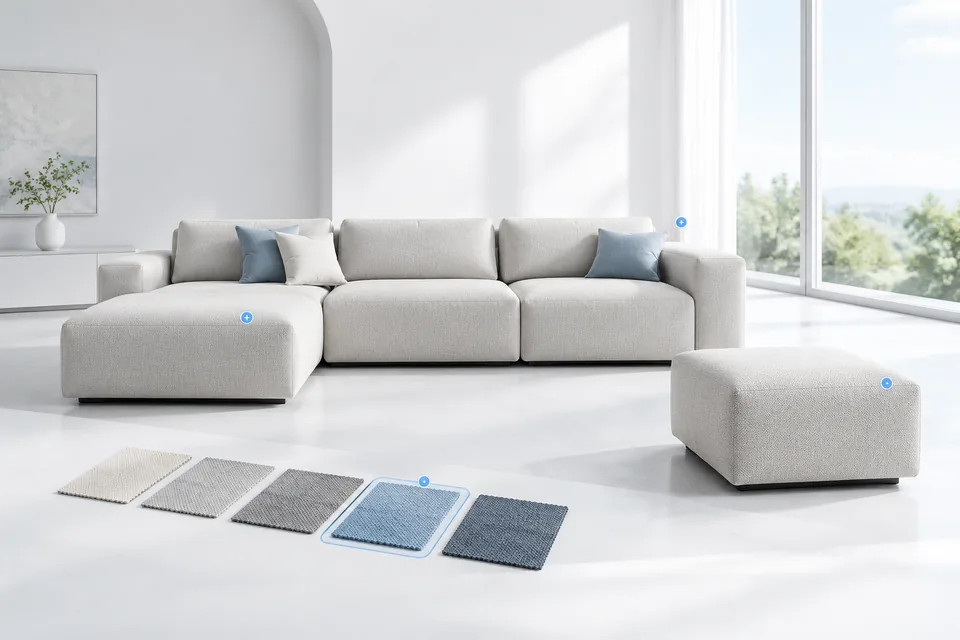
A custom sofa can look straightforward in a photograph, yet the order may depend on seat modules, overall width, corner direction, arm style, fabric grade and leg finish. When those details are discussed across messages, it is easy for the customer and sales team to picture different products. A custom furniture 3D configurator keeps the choices attached to one visible model.
Let customers build the furniture they mean
The experience can start with a base collection and the decisions that matter for that product. A shopper may add or remove sofa modules, switch from a left-hand to a right-hand chaise, change the width, and compare upholstery without leaving the page. The model updates as choices are made, while a compact summary records the current specification.
This approach also works for wardrobes, cabinets, tables, office furniture and storage systems. The interface does not need to expose every production parameter. It should present the decisions a buyer can understand and leave workshop-only details for later confirmation.
Use material choices that remain connected to the order
Fabric and finish samples often live in separate galleries. Customers may remember a color but lose the code when they submit an inquiry. In the 3D configurator, each visible material can be linked to its actual sample name, range or SKU. The selected information then travels with the inquiry or shopping-cart record.
Digital materials are still a screen representation. Lighting, monitor settings and texture preparation affect how a surface looks, so the page should state when a physical sample is required for final approval. This small piece of honesty prevents the 3D preview from being mistaken for a production color guarantee.
Support dimensions without turning the page into CAD software
For configurable furniture, customers usually want to know whether the product will fit. The scene can display overall width, depth and height as the layout changes. Projects with defined size rules may allow direct numeric input; other ranges are better served by approved size steps that match production.
Room-view or AR functions can be added when they support the buying process, but they are not mandatory. A clear product view, reliable configuration rules and a useful handoff to sales often solve the larger problem first.
Connect selection to quotation or e-commerce
The completed configuration can be sent through an inquiry form with an image, option list and reference number. For standard product ranges, choices may map to prices, variants or cart properties. Made-to-order products can remain quotation based, with the selected layout and materials included for the sales team.
We plan the configuration structure around the furniture range, prepare lightweight web models and build the interface for desktop and mobile browsers. The configurator can sit inside an existing website rather than forcing customers to install an app.
The first build does not have to cover an entire catalogue. Many furniture projects are easier to validate with one representative collection that contains the important module, size and material rules. Once the sales team has tested that flow, the same content structure can be extended to related products without redesigning every control.
Have a modular or made-to-order furniture range? Share one product family, its size rules and finish list. We can map the buyer-facing options and estimate the 3D configurator work required.