
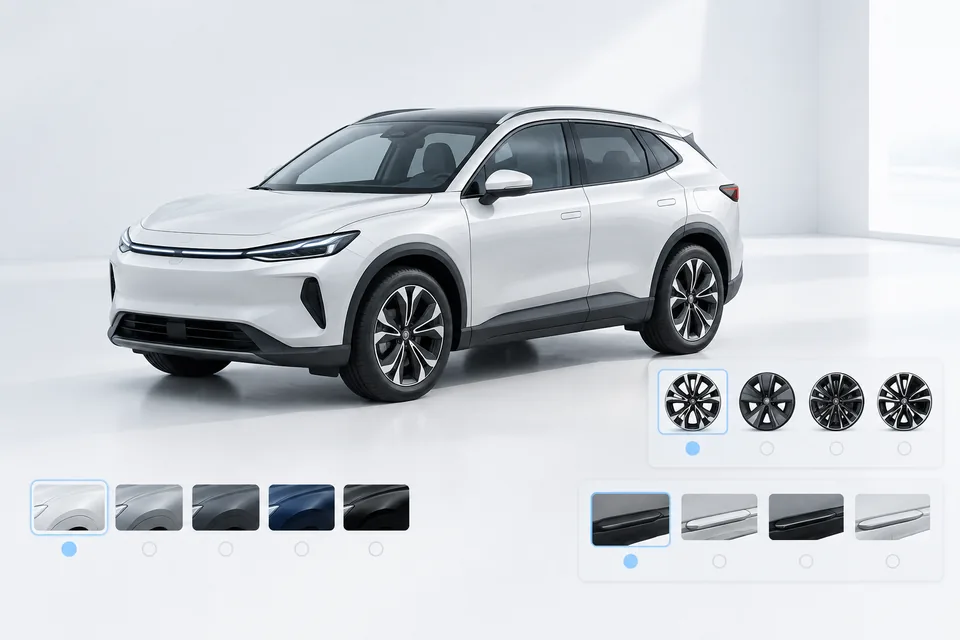
Web 3D Car
Web 3D car configurator development for vehicle options
Vehicle choices are visual, but the rules behind them are exact. A wheel may only be available on one trim. An exterior package may change several parts at once. Some accessories can be ordered together; others cannot. A Web 3D car configurator gives customers the freedom to explore while keeping those combinations under control.
Keep the vehicle in view while options change
Customers can rotate the car, zoom into details and move between exterior and interior views in the browser. Paint, wheels, upholstery, trim pieces and accessory packages update on the same model. The interface can show option names, codes and short notes without covering the vehicle with oversized panels.
The scene may include controlled camera positions for the front, side, rear, cabin or cargo area. Where useful, animations can open doors, move a roof, fold seats or demonstrate a product feature. These interactions are chosen around the sales story rather than added as decoration.
Build the configuration around model and trim rules
Automotive projects need a defined data structure before visual development begins. Model year, region, grade, powertrain and package rules determine which assets and controls should appear. We map these dependencies so that selecting one option can enable, substitute or remove another without leaving the vehicle in an invalid state.
The same configuration record can support a request-a-quote form, dealer lead, saved build or handoff to another system. If an API is available, the project can read current option data or pass the finished selection to a CRM and dealer workflow. Static campaign experiences can use a simpler managed data set.
Prepare automotive models for web delivery
Production vehicle models are normally too heavy for direct use on a public website. Geometry, materials and textures need to be rebuilt or optimized for real-time rendering. Attention goes to visible body lines, paint response, glass, lights and the parts that change during configuration. Hidden engineering detail is removed to reduce download and rendering cost.
Performance targets should reflect the audience. A launch experience shown on controlled hardware can carry more detail than a public configurator expected to work over mobile networks. Progressive loading and sensible quality levels help visitors reach an interactive view sooner.
Suitable uses beyond passenger cars
The same Web 3D approach can serve commercial vehicles, recreational vehicles, motorcycles, construction vehicles and automotive accessories. It also works for dealer tools where staff need to compare approved combinations with a customer during a meeting.
A 3D car configurator presents and records choices; it does not determine final availability, road legality or delivery timing unless those systems supply current data. Clear boundaries make the experience more useful to both buyers and dealers.
Content teams also need a manageable way to update launch copy, option labels and market-specific notes. We can separate those editable values from the rendering code, while model changes remain part of a controlled asset workflow. This division reduces the risk of a routine text edit affecting the vehicle scene.
Need an online vehicle configuration experience? Send a sample model, option matrix and target devices. We will review the visual scope, rule structure and integration points before proposing the build.