Selling industrial equipment online runs on phone calls. It has for decades. A buyer emails, a rep calls back, somebody attaches a PDF, and three weeks later there might be a factory visit. The website sits at the edge of all this, looking tidy, contributing little.
We build configurators for equipment manufacturers, and the first lesson every project teaches us is the same one. The products were never the hard part. The combinations were.
A mid-size production machine might carry five power options, four control systems, a dozen tooling attachments, three safety packages. Multiply it out and you're past a thousand valid machines. Nobody photographs a thousand machines. So the site shows one hero product, and any buyer with a non-standard requirement picks up the phone. That call burns an hour of a rep's time and usually ends with "let me check with engineering."
What moves onto the buyer's screen
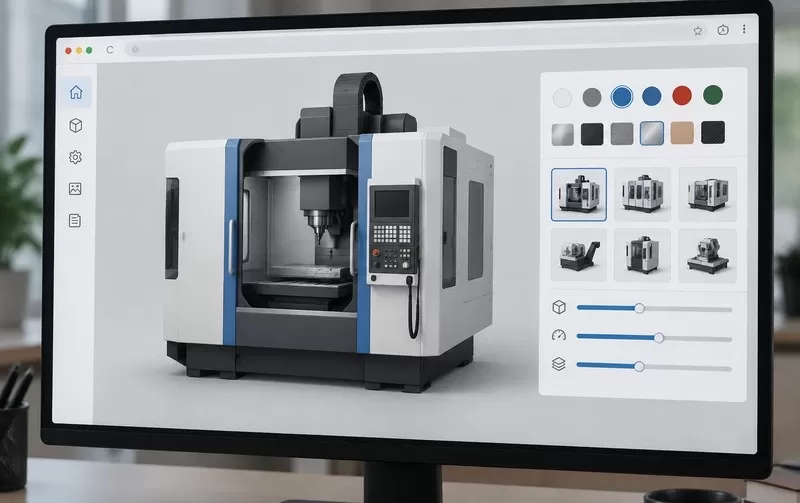
A configurator shifts that phone call onto the buyer's monitor. They pick a base unit, add modules, and watch the machine assemble itself in 3D. Behind the scene, a rules engine holds the engineering knowledge: which modules fit which base, which options force an upgrade, what fits through a 2.4 meter door. Buyers never see any of the rules. They just stop being able to configure something your workshop can't ship.
In the equipment projects we've done, four capabilities do most of the work.
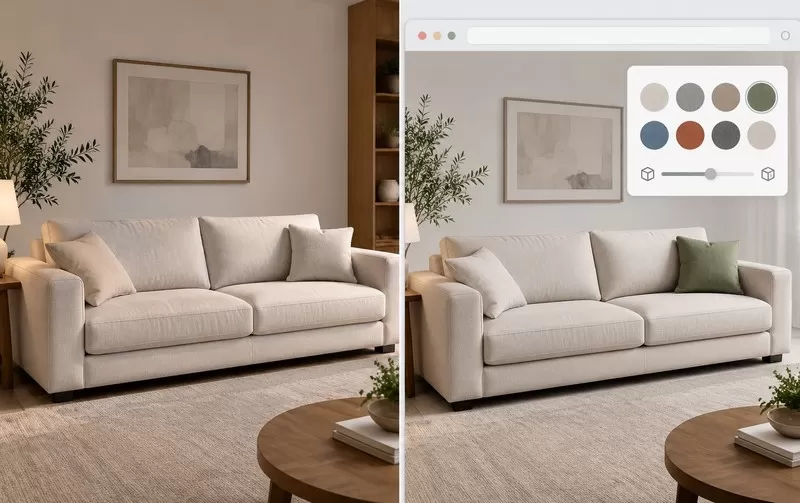
Module selection is the visible one. Base units, add-ons, attachments, whatever the product line breaks into. The machine grows and changes as the buyer works through it, and since the geometry is real rather than faked, a conveyor added at the wrong height shows exactly how it clashes.
Compatibility rules run underneath. If the high-speed spindle needs the upgraded cooling package, the configurator adds it, or blocks the combination with a short explanation. Engineers tend to care about this part more than anyone else involved. It's their knowledge, written down once, answering the same questions forever. It also stops orders that look great in a sales report and can't actually be built.
Dimension input matters for anything that gets installed into a customer's building. The buyer types their available space and the model confirms the fit, clearances included. One of our clients used to discover floor-space conflicts during installation. Now they discover them during configuration, which is a much cheaper place to find out.
The structured summary is what your sales manager will notice first, by the way. Modules, options, dimensions, quantities, all attached to the inquiry. So the first sales conversation starts at "here's what you asked for" rather than an open-ended discovery call.
The CAD problem nobody mentions upfront
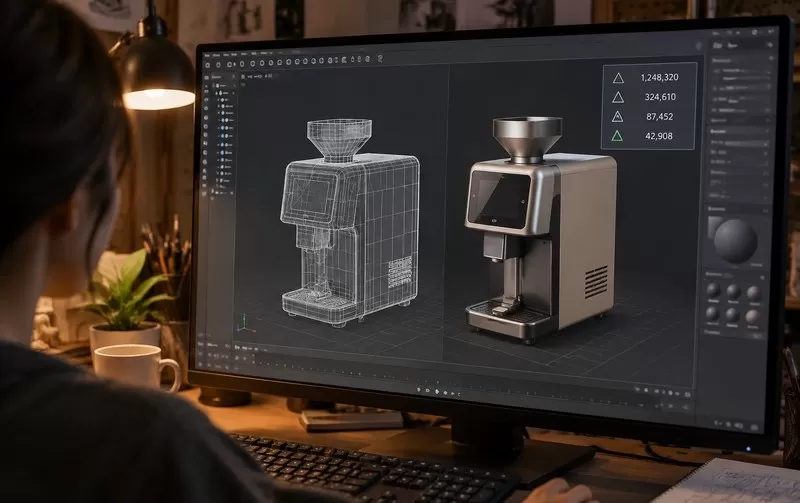
Nobody warns you about the CAD files, which is understandable, because it sounds like a technical footnote. It isn't. A native assembly for one production machine can run past a gigabyte. We received a 4 GB file for a single packaging line once, and the poor thing took ten minutes to open on the office PC. The browser version of that machine needs to live in two or three megabytes, and every configurable part still has to survive as its own object so the buyer can swap it.
Most of the project's model work goes into getting there. Geometry gets thinned out until it renders fast, though how aggressively depends on how far buyers like to zoom. Materials take longest, honestly. Metal is easy. Rubber, fabric and brushed finishes need several rounds of tuning before they stop looking like painted plastic. And we review the result on ordinary laptops and mid-range phones rather than workstation monitors, because buyers own the former and the load times on a $3,000 display lie to you.
No CAD data at all is workable too, though slower and more of a conversation. One machine we built came together from photographs, a tape measure, and a ninety-minute call with the client's production engineer, who talked us through everything the camera couldn't see. Projects like that run on patience more than technology.
Budget and timeline
For a single machine with module selection and inquiry export, budget somewhere between $10,000 and $30,000. The rule logic is usually what decides where in that range you land. Four to eight weeks is typical for a first build, though the option list has a say in that too — in my experience nobody has ever handed us a finished one, so the project tends to start while someone is still debating spindle codes in the background. Every quote we prepare lists the factors that move the number for your specific machine — ask us for one.
Machine two costs a lot less than machine one, and this took me an embarrassingly long time to internalize. The framework carries over, the rules engine carries over, and the integrations were built to be reused from day one. One client paid full price for their first machine and has since added three more at a fraction of the original cost. Nobody there planned it that way at the start; they simply asked, early on, whether the system could take a second machine without starting over. It could.
Where to start
Don't configure the whole catalog, at least not at first. Machine one should not necessarily be the flagship, either. I look at whichever product the sales reps end up explaining over the phone most often, because that is where the hours go. Get that one live and give it a quiet quarter. Afterward the inquiry data will make the case for, or against, converting the rest of the line better than any internal meeting could.
We've described the full approach on our industrial equipment configurator page. Or send us your option list and we'll come back with a scoped plan.
FAQ
Do buyers need to install anything?
No. It runs in the browser, desktop and mobile both. We've had buyers configure machines from QR codes at trade show booths, which still surprises me a little.
Can the configurator handle our internal option codes?
Yes, and it's worth doing early. Part numbers and SAP or ERP references attach to each choice, so the inquiry summary arrives speaking your back office's language rather than a marketing version of it.
What if our product data is confidential?
NDA first, build second. Restricted configurators behind a dealer login are also an option, for clients who don't want the full catalog public.
Does it work for made-to-order equipment with custom dimensions?
Yes. Dimension input is standard. The model rebuilds as sizes change, and the exact measurements travel with the inquiry, clearances noted.