Most configurator projects don't stumble on technology. They stumble on the unglamorous parts: an option list nobody finished, a model that takes fifteen seconds to appear, an inquiry form that dumps a wall of text into someone's inbox. Worth knowing what the process actually looks like before commissioning one, then.
We've shipped configurators for eight years now, across sanitary ware, speakers, building materials, machinery and furniture. What follows is the sequence those projects actually ran in, with the spots where clients get stuck marked honestly.
Week zero: what you send us
Projects start before any contract, with a short list of materials from your side.
Product references. CAD files if you have them, though for simpler products photos and a tape measure will do. The option list, meaning every color, material, size range and add-on you want configurable. Whatever compatibility rules your team already knows. And a decision on pricing: live price display, or inquiry-only.
That last one sounds trivial. It isn't. Live pricing means a rule behind every option, and rules need an owner on your side who can say "this combination costs this much." Clients who arrive with a named product manager move faster than clients who arrive with a committee. Every time.
Stage 1: discovery, a few days
Before anyone touches a 3D model, we sit down with your product logic. Which options matter to buyers. Which combinations are impossible and why. What the inquiry should contain so your sales team can quote without a follow-up email.
This stage produces a written rule document. Least glamorous artifact in the whole project, most valuable one. It survives the project, for one thing. When you add a product next year, that document is already half the specification.
Stage 2: model preparation, one to three weeks
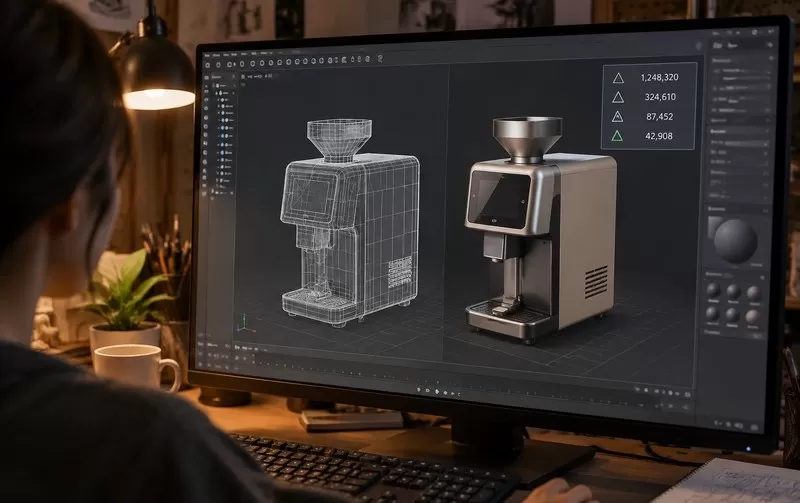
The biggest block of work, and the one clients consistently underestimate. Your CAD assembly, possibly a gigabyte of engineering data, gets rebuilt as a web asset. Geometry reduced, parts grouped by option, materials tuned until fabric reads as fabric and metal doesn't look like plastic.
The target is a scene that loads in a couple of seconds on a normal connection and stays sharp when a buyer zooms into a detail. There's a craft trade-off hiding in there. Cut too little and the page crawls. Cut too much and the product looks like a toy version of itself. We review this stage with clients on their own laptops and phones, not just our monitors, since the buyer's device matters more than ours.
Stage 3: rules and interaction, one to two weeks
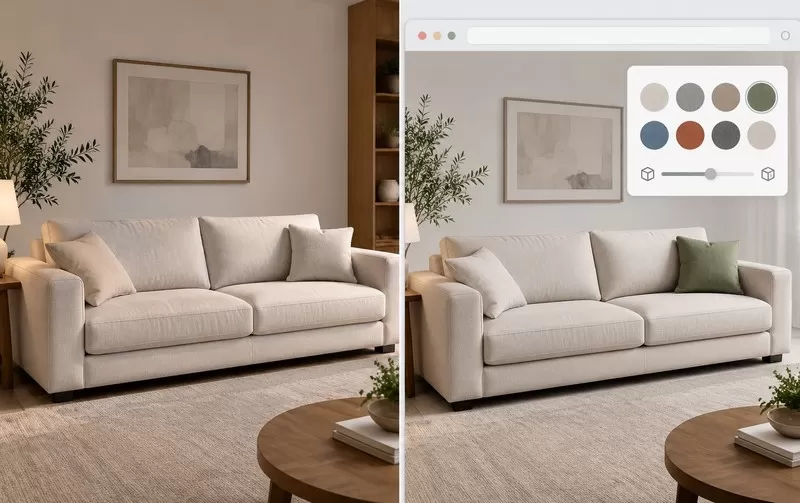
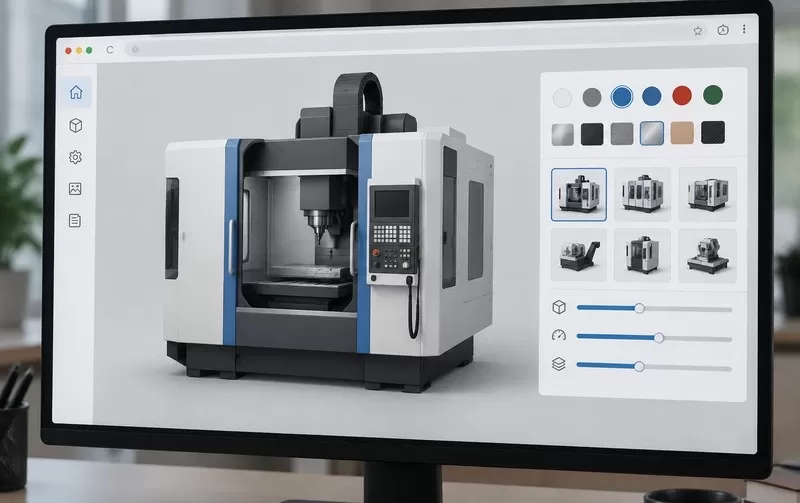
Next the model gets wired to the logic. Option panels, color switching, dimension inputs that rebuild the model while you type. A constraint engine watches the whole thing and blocks combinations the factory can't produce.
We hold the build to one testing rule: anything the configurator lets a buyer submit, the workshop must be able to build. It sounds obvious. It also generates the most arguments of any stage, because edge cases surface here, like the buyer who wants a 40 cm drawer in a 35 cm cabinet frame. Arguing now is cheaper than remaking later.
Stage 4: integration, a few days to two weeks
The configurator has to hand its output to something. Simplest version is a structured inquiry email, configuration summary and options and quantities, landing in your sales inbox. Deeper version pushes into your CRM, ERP or e-commerce cart.
Our usual advice: launch simple. Email handoff works on day one. Add CRM sync later, once inquiry volume justifies it. Paying for integration plumbing before the configurator has proven itself is money spent in the wrong order.
Stage 5: test and launch, a few days
Testing is the last stage, and it's less exotic than it sounds. We open the configurator on whatever phones and laptops your buyers actually carry, run a load test, then walk a real configuration through the inquiry flow until it lands in someone's inbox. One client insisted on seeing it run on the five-year-old iPad their showroom uses, which turned out to be a reasonable thing to insist on — it loaded fine, though we adjusted the layout for the smaller screen anyway.
So, how long in total
Three to five weeks for a single product with standard options, sometimes less. Dimension input, complicated constraints or system integration push it toward six or eight. The cost side of that equation depends on scope — send us your option list for an estimate.
Rendering technology almost never causes delays. Waiting does. Option lists that keep growing, pricing rules nobody has signed off, decisions that need one more meeting. If you want a fast project, appoint one decision-maker and write the option list before kickoff. That's most of it.
After launch
Three things happen, in our experience. New options get added as the catalog evolves, which is routine work. Inquiry quality gets watched for a quarter to see what actually changed. And the framework gets reused for the second product, at a fraction of the first cost, since everything structural already exists.
If that sequence sounds manageable, it is. Our services page covers the full engagement, the industrial equipment version of this process has its own write-up, or send us your CAD files and option list and we'll come back with a scoped plan.
FAQ
Can we start without CAD files?
Yes. Products can be modeled from photographs, dimensions and a call with whoever knows the product best. CAD just makes the model stage faster and cheaper.
Who owns the 3D models and rule logic after launch?
You do. The rule document and the optimized models are yours to keep, which matters if you ever switch vendors or extend the system with another team.
Can we add more products to the same configurator later?
Yes, and much cheaper than the first. Framework, rules engine and integration carry over. Only the model and the option logic are new work.