English
 繁体中文
繁体中文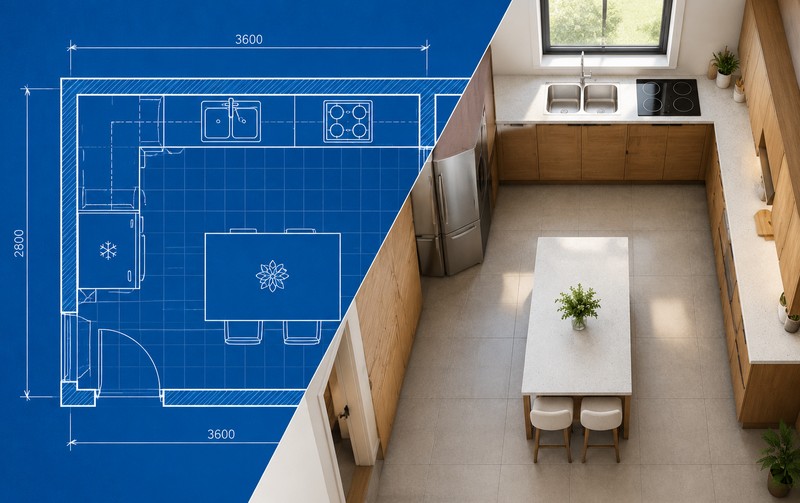
A kitchen is the most expensive product most consumers will ever configure, and the only one where an error shows up installed in their home. A sofa ordered in the wrong fabric is a return. A cabinet run ordered with a 3-centimeter gap, a door swing that collides with the refrigerator, or a glass insert incompatible with its frame is a remanufacture, a schedule slip, and an unhappy client standing in a gutted kitchen. That asymmetry — small configuration mistake, large physical consequence — is why kitchens reward configurators more than almost any other category, and also why a configurator built carelessly for them does active damage.
The economics behind this are visible in survey data. Provoke Insights' 2026 furniture study found 73 percent of shoppers want to see higher-cost purchases in 3D before buying, and kitchens sit at the top of that price range. Vendor-side reporting, which deserves the usual discount, points the same direction: Konfigear cites an average 30 percent conversion lift for cabinet and bath brands using 3D views. What the surveys cannot show is the production side, and that is where kitchens genuinely differ from sofas and wardrobes.
Why kitchens break catalogs that survive elsewhere
A kitchen run is not a product; it is an assembly of products under millimeter constraints. Base cabinets come in standard widths, but the wall they land on does not. A 36-inch base cabinet implies a door count, a drawer configuration, a hinge side — decisions that cascade across the whole run. Swap the sink base from 30 to 33 inches and the fillers, the countertop seam, the appliance clearances and the corner solution all move with it.
Catalog photography collapses first, then configurators without logic. Many cabinetry sellers have tried photo-based visualizers: a library of pre-rendered kitchen images where buyers pick the closest one. That works until the buyer's room is 10 centimeters narrower than any photographed layout, which is most rooms. The failure is structural — photographs freeze combinations, while kitchens demand that dimensions, fronts, hardware and finishes stay *parameters* rather than pictures.
What a cabinet configurator actually does
Walk through what a properly built one covers, in the order a real project moves.
Room definition. The buyer or dealer draws the space with real measurements — walls, windows, plumbing points, door swings. Everything afterward is constrained by this geometry, which is what makes the output trustworthy rather than aspirational.
Cabinet placement and front configuration. Units drag into the run; each front is configurable — doors, drawer stacks, glass, open shelving, handle side. In good implementations, a 90-centimeter base cabinet fills in a two-door front automatically, and corner units reshape as their door style changes. This mirrors what tools like RoomSketch3D expose to consumers, and it is the interaction layer dealers use during showroom consultations.
Rules that make invalid combinations impossible. Glass inserts that need a specific frame, sink bases that cannot take drawer stacks above the basin, appliances that dictate cabinet interiors — the constraint layer silently prevents the combinations that would otherwise be quoted, cut, and discovered wrong in the workshop. This is the layer that separates a selling tool from a production tool, and it is invisible when it works.
Live pricing and the handoff to production. Here the configurator stops being marketing. As options change, a price builds in real time; on order, the system emits shop drawings with dimensions and part labels, cut lists, and in the strongest deployments machine output for CNC nesting. Woodoer's Ontario operation runs this full path — dealers design without CAD skills, receive instant quotes and labeled shop drawings, and submit projects straight to a CNC cabinet factory. The quote is not an estimate that a salesperson re-keys into software later; it *is* the production input.
That last paragraph is the honest dividing line. A configurator that renders beautiful kitchens but stops at a PDF inquiry form has automated the showroom conversation and nothing else. The expensive part of cabinet manufacturing — engineering, programming, cutting — still happens exactly as before, with all the transcription errors the configurator was supposed to remove. If a vendor's demo cannot show you the shop drawing output, ask hard questions about what happens after the quote.
The dealer channel decides adoption
Cabinet makers sell through showrooms, dealers and contractors more often than through their own checkout pages, so the practical adoption question is: who touches the tool? The deployments that stick put it in dealers' hands during client meetings. A designer who can adjust a cabinet run live while the client watches — and show a price updating as finishes change — closes differently from one who promises to email a drawing next week. Several manufacturers have found their dealers become the loudest advocates, because the tool removes the worst part of their week: relaying specifications back and forth and hoping nothing gets lost between the client's kitchen and the factory floor.
For brands weighing the investment, the pattern that emerges across deployments is straightforward.
| Your situation | Configurator priority |
|---|---|
| Made-to-measure or modular cabinet lines with many finishes | High — rules and pricing pay for themselves fastest |
| Showroom network quoting custom kitchens | High — dealer-side adoption drives it |
| Flat-pack standard cabinet catalog, few variants | Moderate — a viewer with hotspots may suffice |
| Fully custom one-off millwork, every job unique | Lower — parametric CAD may fit better than a configurator |
One caution belongs in every plan. The configuration rules are not the software's job — they are your engineers' knowledge written down. Which sink bases accept which drawer configurations, which finishes survive which hinge hardware, which corner solutions require which filler widths: this lives in the heads of people who have been building kitchens for years, and extracting it into rules is the main effort of any serious project. Vendors who promise a kitchen configurator without a rules-gathering phase are selling the render and skipping the factory.
Before signing anything, sit through a demo with your own product instead of the vendor's showcase kitchen, and check five things. Change one cabinet width mid-run and watch whether adjacent units, fillers and the countertop adjust or whether you just built an impossible kitchen. Pick a finish the demo does not feature and ask how long adding it takes. Ask to see the shop drawing the system produces — not a screenshot, the actual output for a real configuration. Request a price breakdown per cabinet rather than a single total, because production planning needs line items. And ask which of your current best-selling combinations the demo engine would refuse, then compare that list with what your workshop actually builds. If the demo fails two or more of these, the gap you are seeing is not polish; it is architecture, and it will not close after the contract is signed.
If you manufacture cabinets or run a dealer network and want a realistic read on scope, send us your cabinet line and option structure — including the cases your sales team currently refuses to quote, because those exceptions are precisely where the rules layer earns its keep. The broader mechanics of how custom furniture configurators handle room-fit and finish logic apply here too, with the addition of production output that furniture rarely needs.
FAQ
Q: What is a kitchen cabinet configurator?
An online tool that lets buyers or dealers design a cabinet layout with real dimensions, configure fronts and finishes, see live pricing, and in production-grade systems output shop drawings and cut lists for manufacturing.
Q: Can a configurator replace a kitchen designer?
No. It replaces transcription and repeated redrawing. Layout judgment, site problem-solving and client communication still need a designer — the tool just stops their decisions from degrading between showroom and workshop.
Q: How accurate are configurator quotes for custom kitchens?
With a complete rules and pricing layer, quotes match the final invoice closely because they derive from the same data production uses. Without that layer, a configurator quote is a lead qualifier, not a quote.
Q: Does a cabinet configurator integrate with CNC machines?
The strongest deployments do, emitting cut lists and machine-ready output. Whether yours should depends on your factory workflow — a shop-drawing handoff to existing CAD/CAM staff is often the pragmatic first step.