English
 繁體中文
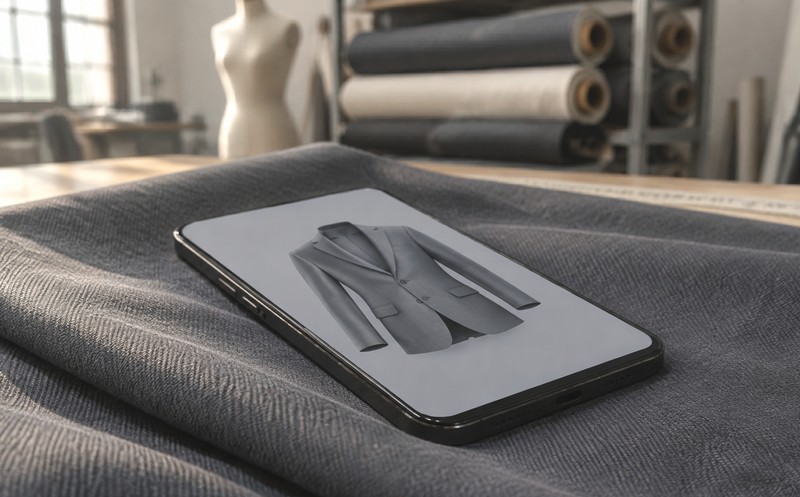
Most clothing configurators online are colour pickers with a 3D model bolted on. You click a swatch, the shirt changes shade, and the whole thing takes twenty seconds to try and about four to forget. Nobody set out to build something shallow. The teams behind those tools started from a codebase written for rigid products, where a door is a door and paint is a texture swap. Fabric does not cooperate with that assumption, and 3d configurator for clothing projects that skip the difference look wrong before the first click lands.
Cloth does not hold a shape
Cloth has no fixed silhouette. That reads like a design-school platitude until you watch a render break because of it. Hang the same jacket on two mannequins and the shoulder line moves. Sleeve length reads differently once the arm bends. A mesh with a colour map pasted on will hold the shape it was modelled in, and it will hold it forever. That perfection is the tell. Merchandisers look at it for two seconds and say plastic. They are not wrong, and no amount of texture resolution fixes it.
What the first screen has to answer
So the first screen matters more than the option count. A buyer landing on the page has one question in their head: will this look right on the person who wears it. Silhouette and fall answer that. A grid of forty swatches does not, no matter how carefully those forty shades were sampled. This is the same reason a flat product shot loses to a turnable model when someone is deciding about a jacket, and it holds whether the buyer is a shopper or a team manager ordering twenty kits for a season.
Phones make it worse. A garment rendered on a 27-inch monitor at 2K looks convincing. The same asset on a five-year-old handset with the brightness turned down loses its folds in the first frame, and half of apparel browsing happens on a handset, often while the person is standing in a shop looking at the real garment. Nobody wins a colour argument against the garment in their hand. Combination and fit are a different story, because the shop cannot show those at all.
There is also the arithmetic nobody puts on the sales page. A polo in six sizes, twelve colours, and two sleeve options is 144 sellable variants. Add front print, back print, and a name field and the number stops being useful for photography. Once a range crosses a hundred or so combinations, a photo library cannot keep up, and that gap is where a clothing configurator starts paying for itself rather than decorating a landing page.
Sizing is a matrix, not a menu
Sizing is where a lot of builds quietly fall apart. Size is not an option like colour. It is a matrix. A jersey has chest, body length, sleeve, and fit; shift the fit and the other three move with it. On paper two hundred combinations exist. On a cutting table maybe sixty do, because factories cut in graded sets and a 4XL chest paired with a medium sleeve is not something anyone will sew. The configurator has to know that, and the knowing lives in rules rather than in the dropdown. We have written elsewhere about how those rules block impossible orders; the short version is that a rule engine is the part buyers never see and the part they notice immediately when it is missing.
What the decoration process will not allow
Decoration runs into limits that are physical rather than digital. Screen printing prices by the colour, so five-colour artwork on a fifty-piece run eats the margin before the order exists. Embroidery has a minimum letter height — drop below roughly 6 mm and the thread fills the counters of an "e" until the text turns into a blob. Neither number is in the model file. Someone has to write them into the option logic, usually after a sample comes back wrong and a merchandiser has to explain to a buyer why the logo on the render and the logo on the polo do not match.
The fabric itself has to be captured as a texture rather than approximated with a colour fill. A knit and a coated shell read completely differently under the same light, and neither looks like a flat fill with noise on top. This is why textile libraries exist and why they are not free. The asset discipline that applies to CAD applies to cloth as well, only with less tolerance for guesses.
Preview and parcel are not the same thing
Then there is the gap between preview and parcel. Fabric colour on screen is not fabric colour under a factory lamp. Navy reads close to black on an uncalibrated monitor, and a buyer who has been burned once will ask for a physical swatch regardless of how good the render looks. There is an arms race available here and it has no finish line. Better to name what the screen can promise, from colour family to print position and proportion, and say plainly that the last ten percent of shade match happens in a sample.
Design software is not a buyer configurator
A word on the tools, because the market mixes two different things under one name. CLO3D, Browzwear, Style3D and Lectra are design software. Pattern makers use them to test fit and drape before cutting a sample, and they are excellent at it. A buyer-facing configurator is a different product with a different job: it has to load in a browser in under three seconds, run on a mid-range phone, and answer a purchasing question instead of a pattern question. Plenty of apparel brands own a seat of one and still have nothing to put on their website.
Once the order exists, the job changes
Once an order is placed the job changes again. The configurator stops selling and starts specifying — cut ticket, print placement, size breakdown, thread colours. If that output gets retyped by a person into the factory system, the savings you modelled at the start leak away one order at a time. This handoff is usually where a store build either integrates or stalls, and it is the same wall anyone hits when wiring configuration into a Shopify storefront and expecting the app to hand production a clean file.
One project worth describing: a garment customisation tool we built for a clothing supplier, running on desktop and mobile, letting users switch fabric colours, preview print placement front and back, and swap the scene lighting. The interaction was the easy half. What took the actual time was the colour library behind it, matched against physical swatch cards closely enough that a buyer would stop asking for a sample just to confirm a shade. It is invisible work, right up until it is missing.
When a picker is the right answer
Not every apparel catalogue needs any of this. Twelve styles and six colours is a photography job, and paying for a configurator there is a way to spend real money on something a good shoot does better. The case for building appears when the buyer's uncertainty is not "which colour" but "how will it sit, how will it scale, how will my logo land on that sleeve at that height".
A signal we have learned to trust is the sales email that arrives with six photos attached and a paragraph explaining that the website does not show the option the customer actually wants. That email is the cost of the gap, and it starts arriving several times a week once a range gets wide. Configurators get funded when someone counts those emails instead of deleting them.
So the question to bring to a vendor is narrow. Which decisions does the buyer get wrong today, and would seeing the garment move fix them. If the answer is a colour, a picker will do. If it is drape, proportion, or a logo that must sit at a specific height on a specific sleeve, you are dealing with a 3d configurator for clothing problem, and the code has to start from cloth rather than from metal. Send us the range before you sign anything and our team will tell you which parts are worth building and which are better left to a camera.
FAQ
Q: Can a 3D configurator show fabric drape accurately enough to skip physical samples?
For colour and print placement, close enough that most buyers stop asking. For hand feel and exact shade match, no. Physical samples exist because fabric under a factory lamp is not the same as fabric under a monitor, and promising otherwise creates the argument you were trying to avoid. The realistic gain is fewer samples, not zero samples.
Q: How many combinations can a clothing configurator handle before it slows down?
The combination count itself is not the bottleneck, because nobody renders all of them at once. What slows a build down is the number of distinct meshes and texture sets loaded on a single page. A range with sixty distinct garment models is a real engineering problem; a range with twelve models and two hundred colour combinations is not, as long as the colour logic is data-driven rather than one model per variant.
Q: Do we need CLO3D or Browzwear before we can build a buyer-facing configurator?
No, though it helps if your pattern team already works in one, because the source geometry will be cleaner. Those tools solve fit and drape for designers. A public configurator needs a lightweight runtime model, a rules layer, and a production handoff, and none of the three comes out of design software.
Q: Should the configurator run on the factory's rules or the marketing team's?
The factory's. Marketing can own which options appear first, but the moment a configurator allows a combination the line cannot sew, someone has to call the customer and explain, and that call costs more than the feature earned.