English
 繁体中文
繁体中文
The question comes up in almost every first call, usually phrased as "how do we know if we actually need this." I like clients who ask it, because a configurator built for the wrong catalog is money set on fire, and we say no to projects more often than people expect. What follows are the five signals that separate catalogs that benefit from one from catalogs that should spend the budget on photography instead, and each one comes with a number you can check your own operation against before talking to any vendor, including us.
Sign 1: Your option count has quietly exploded
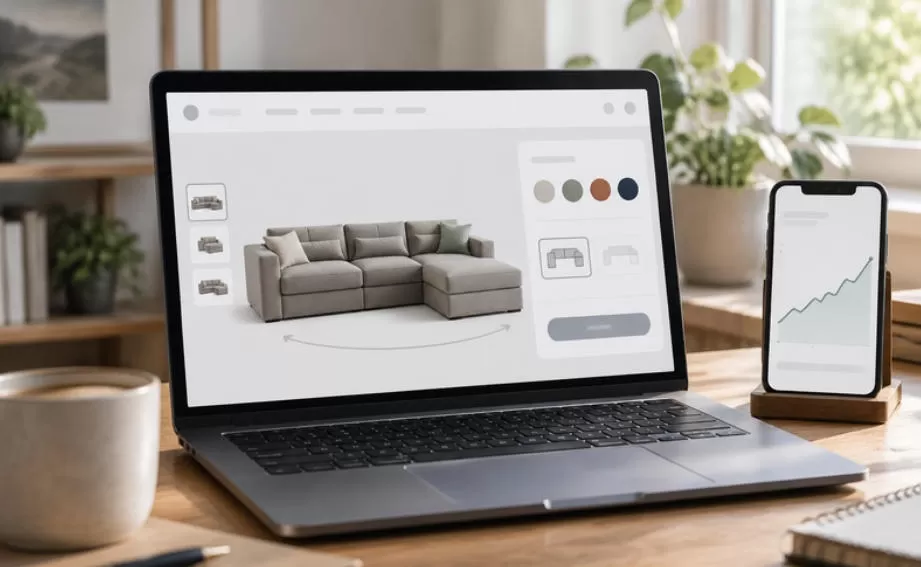
Count the honest number of sellable combinations in your flagship line. Not the marketing count, the real one. Materials times sizes times components times finishes. A sofa line with six fabrics, three sizes, two cushion densities and four leg options is 144 combinations. Nobody shoots 144 combinations. What happens instead is that the gallery shows twelve of them and the rest live in the buyer's imagination, which is a generous place to keep inventory.
There is a threshold where this stops being a photography gap and becomes a structural problem. My rule of thumb, rough but useful: past roughly 30 combinations per product line, a gallery starts actively hiding what you sell. Past 100, it is lying by omission, and buyers can tell. This is also where the money argument turns. Industry data on 3D commerce puts photography and content production savings at up to 70 percent once packshots are generated from the model automatically instead of shot, so at high variant counts the configurator stops being a sales tool and starts being a content pipeline.
Sign 2: The "does it come in" emails keep coming
Pre-sale inboxes are a surprisingly honest diagnostic. When buyers email to ask whether a product exists in a specific combination, they are telling you the catalog failed to answer a question the product itself raises. A furniture client of ours logged three weeks of these emails before a project. Most asked about combinations that were in stock, configurable, and completely invisible on the product page.
The broader research says these questions are not edge cases. A Provoke Insights survey from 2026 found that 62 percent of furniture shoppers struggle to picture a product in their own home, and Salsify's work on product content found 46 percent of shoppers will leave a site when they cannot find content that engages them. Every unanswered configuration email is a conversion with friction attached. Some get answered in time. Some arrive after the buyer has already bought elsewhere. If your team answers the same configuration question more than a handful of times a week, the catalog is doing work that a page element should do, and doing it slowly.
Sign 3: Custom sizes or made-to-order are growing
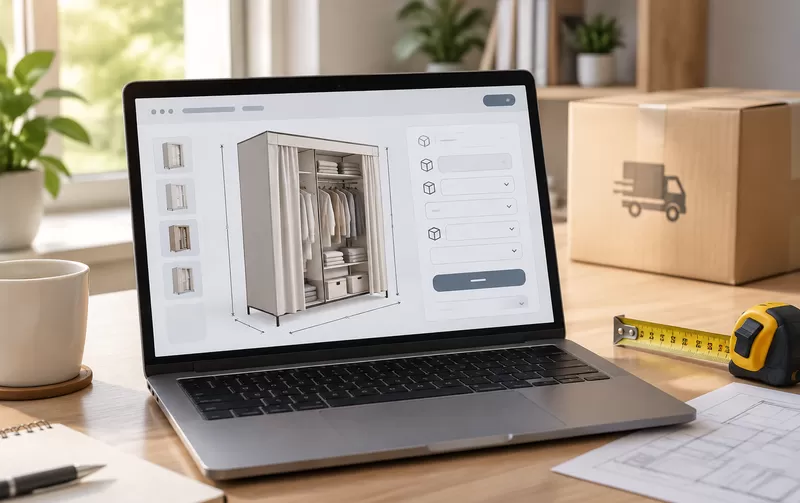
The moment a product accepts buyer-entered dimensions, photography exits the conversation entirely. There is no photo of a wardrobe you have not built yet. Made-to-measure brands cope with spec sheets and phone calls, which works until order volume makes the calls a bottleneck, or until a competitor lets buyers see their exact size on screen and the market quietly rewrites its expectations.
The demand side has already moved. In the same Provoke Insights data, 73 percent of shoppers said they want higher-cost purchases shown in 3D before buying, and 67 percent reported being more likely to spend $2,500 or more after seeing an item in 3D. Custom dimensions are the case with the shortest distance to payback, because dimension input does something no photograph can: it makes the buyer's own numbers part of the product display. For furniture and fitted interiors this is usually the sign that converts skeptics fastest, and our furniture configurator work is almost entirely driven by it.
Sign 4: Returns keep citing wrong expectations
Pull your return reasons for the last six months and read the wording. "Looked different than expected." "Didn't fit the space." "Not the color I thought." These are expectation failures, and their share of your return volume tells you whether the gap between display and delivery is costing real money. The scale is bigger than most brands assume. US online returns ran at roughly 19 percent of sales in 2025, on the order of $200 billion according to NRF figures, and Barclaycard research found about 22 percent of fashion returns happen because the item looked different in person than online.
Photography bakes studio lighting into every image and shows one combination at a time, so expectation gaps are partially built into the format itself. Configurator deployments report return reductions of 25 to 40 percent across furniture and apparel, with custom furniture projects sometimes cited as high as 80 percent, though treat the highest figures as best-case rather than planning numbers. What travels to your business is the mechanism: a buyer who configured the exact color, material and size has fewer ways to be surprised at delivery.
Sign 5: Your sales hours are going to configuration explanations
The last sign hides in the calendar rather than the inbox. Ask your sales team how much of their week goes to walking buyers through options, compatibilities and trade-offs that the catalog could have shown. For manufacturers with deep product lines this is often the single largest hidden cost in the funnel, and it scales badly, because every new option multiplies the explanations.
One client in industrial equipment calculated it after the fact. Their reps spent more than half of each inquiry call on "what options exist and what fits together" questions. The configurator took that entire category of conversation off the call, and the calls got shorter and more quotable at the same time. The published B2B numbers point the same direction, with Aberdeen Group research putting average deal size 105 percent larger for companies using CPQ-style configuration, and vendor-published figures around two to three times higher lead-to-opportunity conversion for configured inquiries versus contact forms. Vendor data deserves skepticism, but the mechanism is not mysterious: an inquiry that arrives with its specification attached starts the conversation at proposal stage instead of discovery.
Reading the signs together
One signal alone rarely justifies the project. Two or three together, especially 1 with 2, or 3 with 4, are the pattern we see in catalogs where a configurator pays for itself within the first year. If you recognize your own operation in most of this list, the sensible next step is a scope conversation, and our services page outlines how we run one. The range of products this covers, from modular furniture to production equipment, is visible on our main site. If you recognize none of it, buy a better camera and spend the difference on dinner.
Signal | Where to check | Benchmark to compare |
Option explosion | Sellable combinations per line | 30+ = gallery strains, 100+ = gallery fails |
Pre-sale emails | Configuration questions per week | More than a handful = page gap |
Made-to-order share | Custom vs standard orders | Growing = shortest payback |
Return reasons | "Not as expected" share | 22% of returns cite appearance |
Sales time | Options talk per call | Half the call = configurator territory |
FAQ
We have 20 combinations per product. Is that enough to justify one?
Borderline. At that count a well-organized gallery usually covers the range, and I would spend the budget there first. The math changes when combinations interact, meaning some options only make sense together, since galleries cannot show rules.
Can a configurator replace our spec sheets?
It replaces the reading burden, not the documents. Buyers who need exact technical data still want a downloadable sheet, and we keep generating them alongside the configurator. Most buyers, though, prefer looking at the product to reading about it.
Does this work for B2B catalogs with dealer networks?
Yes, and dealer adoption is often the fastest win. Dealers use the configurator to quote on the spot instead of waiting for head office, and configuration-attached inquiries cut the back-and-forth that dealer channels are famous for.
What is the smallest catalog size where this makes sense?
It is less about catalog size and more about complexity per product. We have built single-product configurators that paid off quickly because that one product carried dozens of options. One fixed product in three colors is a photography job.